
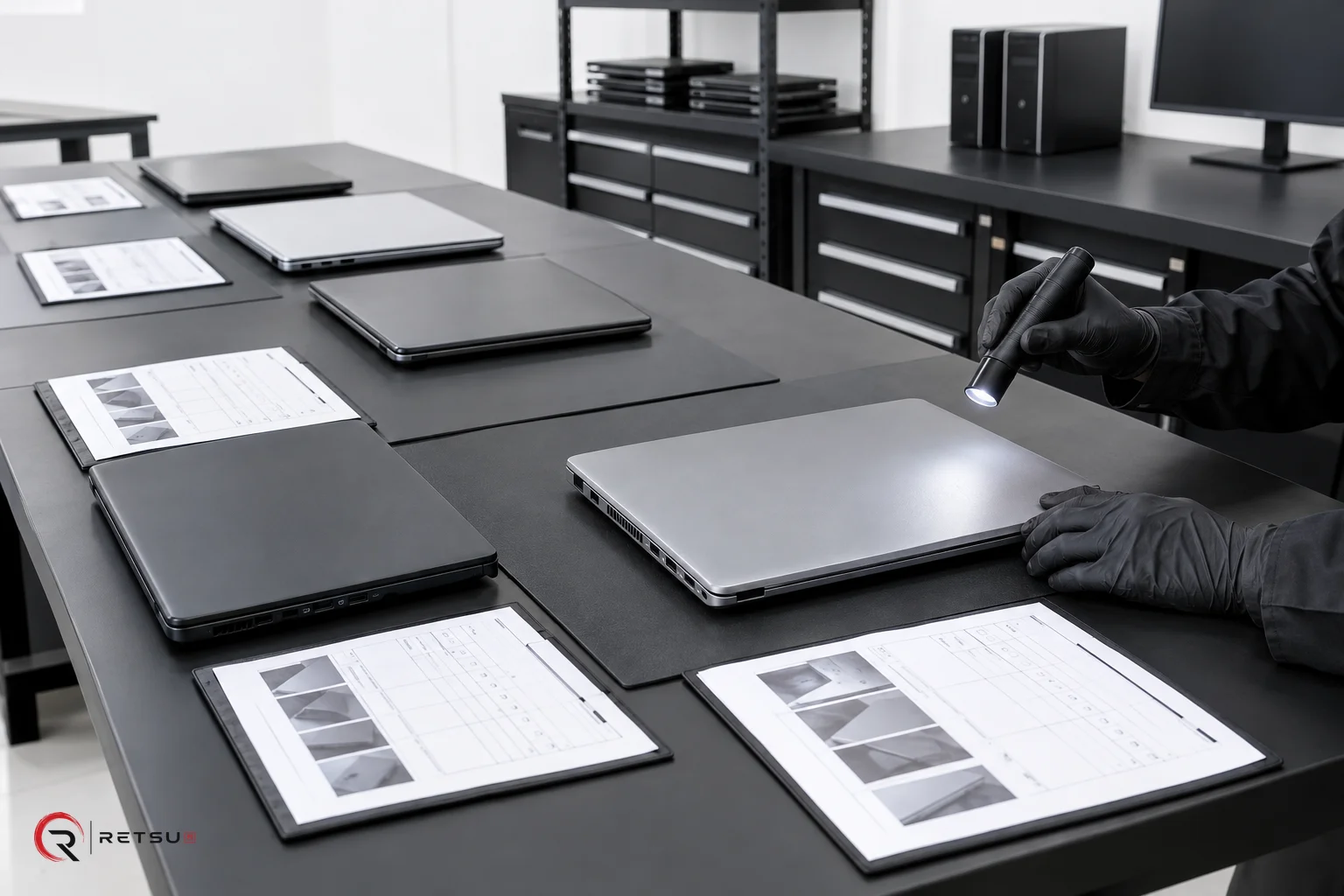
Device grading is a crucial part of the ITAD and refurbishment process, determining how each device moves through your workflow and how it is represented to potential buyers or downstream partners. By building repeatable, transparent grading steps, you help ensure fair value, clear inventory records and customer confidence. Retsu offers a modular suite that can help streamline these efforts by connecting device grading with inventory, reporting and wider commercial workflows.
Why Consistent Device Grading Matters
For teams handling a variety of devices, from laptops and desktops to servers or mobile devices, the consistency of your grading process shapes everything from pricing to warranty decisions. Inconsistent grading can lead to confusion among sales teams, disputes with buyers and gaps in inventory management. A well-structured device grading process minimises these risks by making each grade’s criteria clear, repeatable and traceable.
- Transparency: A set grading process helps teams communicate device condition internally and externally.
- Efficiency: When grading steps are defined and integrated, staff can act confidently and without delays.
- Reliability: Linked documentation enables you to justify grading decisions if questioned later.
Integrating Device Grading Into Your Workflow
Device grading works best when embedded early in the device intake process. With Retsu, you can include grading within your end-to-end workflow, so that grading data follows each item from arrival to sale or donation. Portal, the core of the Retsu suite, brings together device records, inventory management and commercial activity. Reports generated from Erasure and Profiler modules are linked back to Portal, providing a single source of truth for each device—including its grading stage.
Practical steps to integrate grading into your process include:
- Define the grading categories and criteria your team uses (for example: Grade A, B, C or specific cosmetic guidelines).
- Set up standard checklists to assess external condition, battery performance, ports, and functional integrity.
- Capture device images and assessment notes in Retsu Portal for each intake.
- Ensure grading data is carried over into records available for resale, inventory or downstream processing.
Reducing Errors With Connected Records
One advantage of using a modular suite like Retsu is the way it helps reduce duplicate entry and errors. When a device is catalogued, graded and tested through Profiler, the assessment results and grading details can be passed back to Portal. This means less room for manual errors and omissions. By following the same process for every device, your records remain consistent whether the results come from the grading bench, the erasure station or the warehouse intake.
- Automated record linking: Grading results flow automatically from Profiler or Erasure into Portal.
- Single source of truth: Inventory and commercial teams work from the same grading information.
- Clear hand-off: As devices move from technical intake, through grading, into inventory, and onwards to resale, every handover uses the same updated record.
Connecting Grading With Reporting and Inventory
Grading is only as useful as its documentation. In Retsu, historical records of grading appraisals are connected to the device lifecycle. This makes it straightforward to pull reports on devices by grade, to audit grading decisions, or to export device lists for sales and dispatch teams. When devices are erased, repaired, or receive updated assessments, their grade and supporting reports remain linked—so changes are always captured.
Practical ways to use grading data in Retsu include:
- Exporting filtered lists of Grade A or B devices ready for resale.
- Matching device condition reports with image evidence for external audits.
- Tracing grade adjustments over time to identify recurring issues or shelf-life patterns.
Building Confidence in Resale and Downstream Use
For refurbishment and ITAD teams, building trust with downstream buyers or partners is essential. Device grading, when handled consistently and transparently, provides clarity on what end-users receive and why devices are priced as they are. Retsu’s integrated workflow ensures that each grade is documented, traceable and reflected in inventory listings. This gives buyers more confidence and helps teams respond quickly to any condition queries or disputes. With all grading actions logged in Portal, you can revisit or defend past decisions with supporting records as needed.
Start Building Your Device Grading Workflow With Retsu
Device grading is vital for delivering quality in any ITAD or refurbishment operation. By making grading part of a connected, modular suite like Retsu, you can avoid duplicate entries, reduce the risk of manual error and present clear, trustworthy records for every device processed. If you want to learn more about how Retsu can support your grading and inventory workflows, visit Retsu.uk and explore the platform’s full capabilities for IT lifecycle management.